Article Summary
Based on insights from a FORTIS conversation with Mandy Shoben, Capital Projects Manager at Bedfordshire Hospitals NHS Foundation Trust, this article explores why healthcare environments should be understood as active contributors to patient experience, staff pride, operational performance and long-term value. At a time when NHS capital is constrained, it argues that better design is not about unnecessary embellishment. It is about engaging the right people early, making intelligent choices, and creating clinical spaces that are functional, durable and deeply human.

The design of a healthcare environment is often noticed most when it goes wrong: a waiting room that feels tired, a treatment space that makes children anxious before care has even begun, a reception desk that feels more like a barrier than a welcome point, or a room that works on paper but is difficult to clean, maintain or use in practice. These are not small details. They shape how patients feel, how staff work and how well an environment continues to perform over time.
In a recent FORTIS conversation with Mandy Shoben, Capital Projects Manager at Bedfordshire Hospitals NHS Foundation Trust, one message came through clearly: how a healthcare space looks and feels matters, but good design is not simply about improving the appearance of a clinical environment. It is about understanding how that space will be experienced, used, maintained and cared for from the very beginning. Mandy’s experience challenges the idea that the look and feel of a clinical space is secondary to the care delivered within it. In her view, the environment plays a direct role in the experience of patients, families and staff, shaping how people feel from the moment they enter a room. As she puts it,
It doesn’t have to feel and look like a hospital to be within a hospital
It is a simple point, but an important one. Healthcare spaces still need to be safe, practical and clinically appropriate, but they do not need to feel cold or institutional to do their job well.
Why experience is part of how healthcare spaces perform
In many NHS settings, clinical environments have understandably been shaped by compliance, durability and cost control. These things matter, but when they become the only measures of success, the result can be spaces that are safe and functional, yet impersonal for the patients, families and staff who use them every day. Mandy’s work challenges the idea that healthcare environments have to choose between clinical practicality and human experience. Through projects in children’s wards, oncology settings and maternity services, she has shown that a space can meet the demands of a clinical setting while still offering comfort, calm and dignity.
This was clear in her work on Bedford Hospital’s children’s ward, where recent projects included an enchanted forest treatment room and two themed oncology rooms. One was designed as a softer beach haven space, while the other used a brighter tropical jungle theme. These choices were carefully considered. Softer colours can help create a calmer environment, while brighter themes can bring energy, interest and distraction. The rooms also included murals and LED image panels above beds and cots, giving children something to look at and focus on during treatment. For a child entering a clinical space, that first impression matters. It can change how the room feels before any procedure begins, helping to reduce anxiety and create a sense that the space has been designed with them in mind.
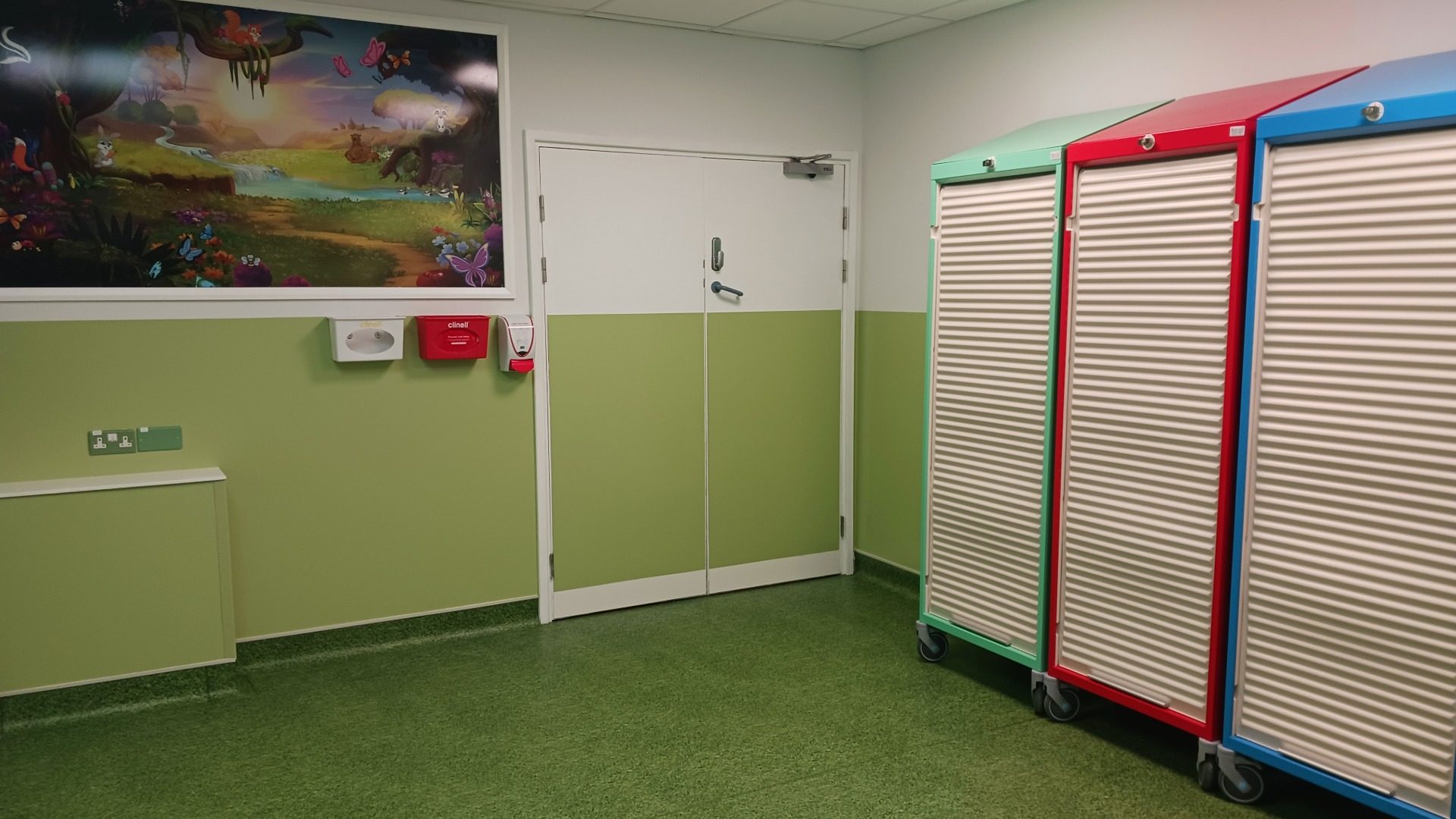
Image 1 – Bedford Hospital’s children’s ward
Mandy saw the impact of this when the oncology rooms were completed. As she recalls, a father walked past with a child of around two and a half, who looked into one of the newly finished rooms and ran straight in, “To me, you can’t ask more than that.” It is a small moment, but it captures the wider point. The environment does not replace clinical care, but it does shape the conditions in which care happens. It can help patients feel safer, give families reassurance and support staff in delivering care in a space that feels considered rather than purely functional.
Good design starts with listening
A consistent theme across Mandy’s work is the importance of engagement from the very beginning of a project. Before decisions are made, she spends time with the people who use the space. That includes clinical teams, patients and families where appropriate, reception staff, cleaners, maintenance teams and others who understand the daily reality of the environment. Each group sees something others may not, and each can identify practical challenges or missed opportunities that would rarely be obvious from a drawing or specification. This depth of engagement does more than improve the design. It creates ownership. When people can recognise their input in a completed space, they are more likely to feel proud of it and to care for it over time. The long-term impact of this approach is often underestimated. In a delivery suite triage project, early and sustained engagement helped transform a constrained and inadequate area into a more open, welcoming and accessible environment. Crucially, the success did not end at handover. Two years later, the space remained in excellent condition, not because of additional resource, but because the team felt connected to it and took pride in looking after it.
This points to a broader lesson for senior leaders. A project is not complete on the day it opens. Its real value is realised over months and years, in how well it supports care, responds to everyday use and is sustained by the people who depend on it. Early engagement, therefore, is not simply a design principle. It is a strategic decision that directly influences long-term performance, value and outcomes.
Designing for whole life value
One of the most persistent challenges in NHS capital delivery is the pressure to reduce immediate cost. This is understandable. Budgets are constrained, demand is rising and every decision must be justified against competing priorities. But when value is judged only at the point of delivery, critical long-term consequences are often overlooked. Design decisions should be evaluated across the full life of a space. Durability, ease of maintenance, cleaning requirements, staff experience, patient experience and operational performance all have a direct impact on value. A cheaper finish may appear to deliver a saving on day one, but if it deteriorates quickly, marks easily or requires repeated intervention, that saving is quickly eroded.
Mandy’s work shows how small design decisions can carry much wider value. One example is her use of coloured hygienic wall cladding on the lower half of walls. This introduces colour and warmth into the environment, while also protecting surfaces from damage caused by chairs, beds and trolleys. It simplifies cleaning for domestic teams, reduces the need for frequent repainting and helps the space retain a clean, cared-for appearance over time. What makes this approach effective is not the individual design feature, but the thinking behind it. The same decision supports infection control, reduces maintenance burden, improves staff experience and protects the long-term condition of the environment. It aligns multiple operational priorities within a single intervention. For senior leaders, this points to an important shift in perspective. Better design should not be framed as an additional cost, but as a way of safeguarding investment, reducing avoidable expenditure and enabling environments to perform consistently over time. In this context, whole life value is not an abstract principle. It is a practical framework for making better decisions at the very start of a project.
Keeping scope, cost and programme aligned
Another important part of Mandy’s approach is clarity from the outset. At the start of a project, she separates what the service must have from what it would like to have and what can only be included if budget allows, creating a clear hierarchy before cost, programme and delivery pressures begin to narrow the options. That discipline matters because not every requirement can carry the same weight. Some decisions are essential to safety, compliance, clinical function or dignity, while others may be valuable but less critical. Without that distinction, value engineering can become reactive and important elements may be lost without a full understanding of their impact.
Mandy’s phrase, “it’s not in the scope,” reflects this discipline. Scope is not there to limit ambition, but to protect the purpose of the project and keep decisions aligned with the budget, programme and intended outcome. For senior leaders, the lesson is clear: early clarity gives teams more control. When scope, cost and programme are considered together from the beginning, projects are more likely to protect what matters most and avoid spending time or money on elements that do not support the core purpose of the scheme.
A better way to think about the NHS estate
The NHS cannot afford to treat the estate as a backdrop to care. Buildings and rooms influence how services function, how staff feel and how patients and families experience some of the most difficult moments in their lives. That does not mean every improvement has to be large, expensive or architecturally ambitious. Sometimes the most meaningful changes are smaller and more carefully considered: a treatment room that feels less frightening, a reception area that feels more welcoming, a quiet space that offers privacy and calm, or a material choice that keeps a ward looking cared for over time.
What matters is the intent behind those decisions. Mandy’s experience shows that better healthcare design starts with asking more thoughtful questions about who will use a space, how it will feel, how it will be cleaned and maintained, and what needs to be protected when budget or programme pressures appear. For senior healthcare leaders, this is the real opportunity. Design should not be treated as an optional enhancement once the serious decisions have been made, because it is one of the ways those decisions are felt by patients, families and staff every day. The NHS estate will always need to be safe, compliant and efficient, but it should also be capable of reassurance, dignity and warmth. As Mandy’s work demonstrates, those ambitions are not in conflict. When the essentials are properly understood, a healthcare space can be technically right and still feel human.
Share your perspective with FORTIS
FORTIS is a thought-leadership platform created as a way to give back to the industry by making space for thoughtful perspectives and practical insight from across the sector. We are always interested in hearing from people with experience, ideas or lessons that could help others think differently about the challenges facing the sector.
If you would like to contribute to FORTIS or be part of a future article, we would be delighted to hear from you. Get in touch here