Article Summary
Drawing on insights from leaders at Arthrex, alongside clinical input from Mr Alistair Phillips and Mr Mike Hayton, this article explores how evolving surgical techniques and technologies are supporting the shift of suitable procedures into lower-intensity care settings - and what this could mean for unlocking capacity, improving patient access and supporting more flexible, sustainable care delivery.
Across modern healthcare systems, there is growing recognition that not every surgical procedure requires the same level of infrastructure, staffing or estate intensity. Operating theatres remain essential for trauma, complex surgery and procedures requiring anaesthesia support, but advances in clinical pathways and surgical technology are creating opportunities to deliver certain lower-acuity interventions in different ways. Carpal tunnel release (CTR) is one procedure increasingly shaping that conversation. According to NHS data, over 50,000 CTR procedures are performed each year, making it one of the most commonly performed elective hand surgeries. Although the procedure itself is relatively short and typically undertaken under local anaesthetic, its impact on patients can be significant. Symptoms often affect employment, independence and everyday activity, meaning quicker treatment and faster recovery can have meaningful benefits not only for patients, but for the wider system as well.
Importantly, this is not a new or experimental concept. Across many NHS organisations, open CTR is already performed safely in procedure room settings under local anaesthetic techniques such as WALANT (Wide Awake Local Anaesthesia No Tourniquet). Guidance from the British Society for Surgery of the Hand, developed alongside the GIRFT programme, confirms that selected elective hand procedures can be safely delivered outside main theatres. The opportunity now is not simply proving these models work, it is understanding how they can be adopted more consistently and at greater scale across the system.
This article draws on insights from a recent discussion with senior leaders at Arthrex, alongside the clinical perspectives of Consultant Hand Surgeon Mr Alistair Phillips FRCS (Tr & Orth) and Consultant Orthopaedic Hand Surgeon Mr Mike Hayton, to explore how evolving surgical techniques, technologies and care models may help accelerate this shift.
Evolving surgical pathways
Constraints on physical estate are a recognised structural pressure within the NHS. As demand for elective care continues to grow, the ability of organisations to expand traditional theatre-based capacity is inherently limited. This has prompted a wider re-evaluation of how and where care is delivered, with established models of surgical delivery now being reconsidered. This shift is already underway. National policy, payment reform and GIRFT guidance are increasingly supportive of moving appropriate activity into outpatient and ambulatory settings, reflecting a growing consensus that not all surgical procedures require the infrastructure of a full operating theatre.
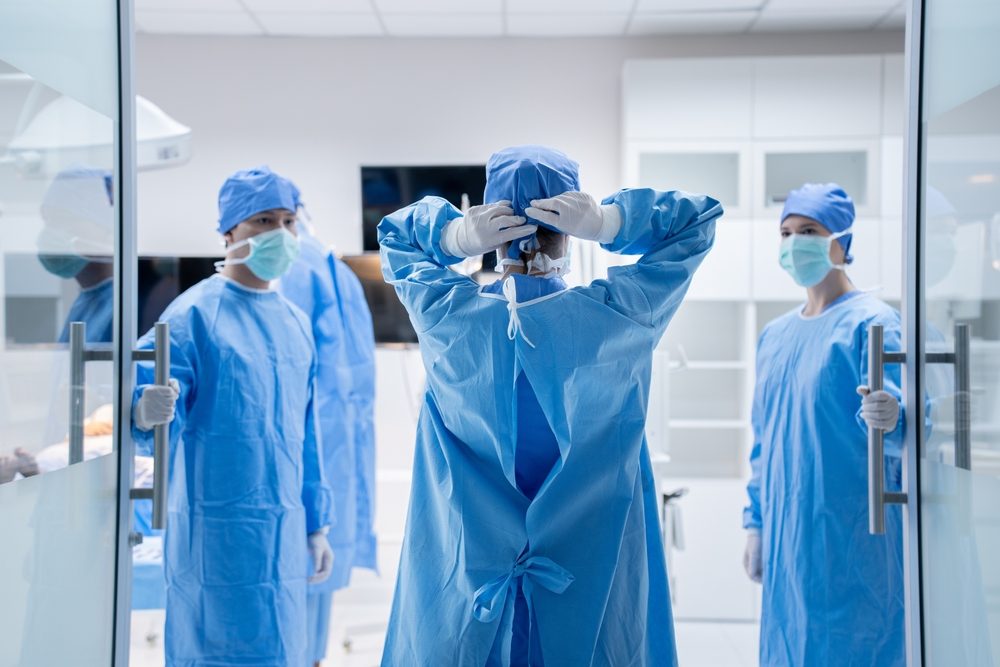
Operating theatres are among the most sophisticated environments in any hospital, and they exist for good reason. Trauma surgery, major orthopaedic procedures and operations requiring general or regional anaesthesia all depend on the infrastructure they provide. The challenge arises when lower-complexity procedures routinely occupy the same spaces, creating avoidable pressure on capacity, workforce and patient flow. Identifying high-volume, lower-acuity opportunities where care models can evolve is therefore an important part of the broader solution.
CTR is one example where this shift is becoming particularly relevant. As one of the most commonly performed elective hand procedures in the NHS, it combines high procedural volume with relatively low clinical complexity. Delivered under local anaesthetic and requiring minimal recovery infrastructure, it represents a clear opportunity to align the intensity of the care environment more closely with the needs of the procedure itself. As Consultant Hand Surgeon Mr Alistair Phillips explains:
Carpal tunnel release itself takes between ten and fifteen minutes under open technique. Patients do not need to change into theatre gowns. They do not require pre-assessment. They do not need to stop medications. There is no need for sedation, no recovery room requirement, no post-anaesthetic monitoring
Taken together, these features prompt consideration of where such procedures are best delivered. Beyond its operational characteristics, CTR also carries meaningful implications for patients. Symptoms can significantly impair hand function, affecting the ability to work and carry out everyday activities. As a result, pathways that support faster recovery and earlier return to normal function have a clear and direct value. In this context, endoscopic carpal tunnel release (ECTR) further strengthens the case for rethinking how care is delivered. Compared with traditional open approaches, ECTR has been associated with reduced soft tissue disruption, less post-operative pain, and earlier return to work – outcomes that matter directly to patients and employers alike. However, the potential to combine these clinical benefits with more efficient models of care has not always been fully realised. Historically, endoscopic approaches have been associated with equipment, and workflows that aligned more closely with operating theatre environments. In practice, this limited the extent to which ECTR could be adopted more widely within procedure-room or ambulatory pathways, despite its clinical advantages. That dynamic is now beginning to change.
Technology supporting the shift
Advances in surgical technology are now helping support that transition further. Newer systems are reducing many of the logistical constraints historically associated with endoscopic procedures, making them more adaptable to procedure room and ambulatory environments. One example discussed during the FORTIS conversation was the Arthrex NanoNeedle® Carpal Tunnel Release system. By combining compact visualisation technology with ready-to-use sterile-packed instruments, systems such as NanoNeedle® can support the delivery of endoscopic CTR pathways outside traditional theatre environments. In doing so, it brings together the clinical benefits associated with endoscopic techniques alongside the operational advantages of lower-intensity care settings.
Research from the US, where ambulatory care delivery is more established, has demonstrated the clinical viability of performing NanoNeedle® CTR within procedure room settings. Complementary UK evidence suggests that these procedure room pathways may also support improved operational efficiency, including lower staffing requirements, reduced costs, and lower environmental emissions compared with conventional theatre-based approaches. Taken together, this evidence indicates that enabling endoscopic CTR outside of traditional theatre settings is not only feasible, but may offer a practical route to scaling meaningful benefits for both patients and the wider healthcare system. For patients, the benefits of endoscopic CTR can extend beyond convenience. By reducing disruption to the palm compared with open release, endoscopic approaches may support faster recovery and an earlier return to work and normal daily activities. As Consultant Orthopaedic Hand Surgeon Mr Mike Hayton explains:
My early use of the NanoNeedle® technique was focused on bilateral procedures, where minimising recovery burden is especially important. What has become clear more recently is the broader patient demand for quicker recovery and less disruption to daily life. The ability to deliver endoscopic CTR in a simplified, lower-intensity setting means we can meet that demand while also improving how we use theatre capacity
At a system level, those individual gains begin to compound. Reduced reliance on operating theatres can lower per-case costs, while high-throughput clinic models create opportunities to treat more patients within shorter timeframes. Across parts of the NHS, clinicians are already exploring pathways where patients can be assessed and treated within the same visit, reducing delays between consultation and intervention while improving efficiency across the pathway. In this sense, technology is not redefining what is clinically possible. Rather, it is helping accelerate approaches that parts of the NHS are already demonstrating successfully.
Looking beyond the acute site
If lower-intensity surgical pathways are already proving successful within hospitals and ambulatory settings, the next stage of the conversation may be how some of these models extend further into the community. Across the NHS, neighbourhood health centres and community diagnostic hubs are increasingly positioned as part of the future of accessible healthcare. Yet much of the discussion around care closer to home continues to focus on consultations, diagnostics and outpatient activity. Less attention has been given to the role that appropriate minor surgical procedures could also play within these environments. CTR offers a compelling example of what this could potentially look like. For procedures delivered under local anaesthetic with minimal recovery requirements, the possibility of one-stop pathways becomes increasingly realistic.
In this context, patients could move through assessment, consultation and treatment in a more integrated way, with suitable cases managed in neighbourhood, ambulatory or community-based settings and returning home the same day. While this model will not be appropriate for every patient or every procedure, it demonstrates how community-based surgical care could become a practical extension of pathways already emerging across the NHS.
For patients, this can mean shorter journeys, simpler pathways and faster access to treatment, alongside earlier return to normal activity and work. For clinicians, it creates opportunities to deliver high-volume procedures more efficiently within environments better aligned to the needs of the procedure itself. And for the wider system, it offers another way to help release pressure on acute hospital infrastructure by ensuring theatres remain focused on the cases that most depend on them. What conversations like this make clear is that the foundations for this shift already exist. The clinical pathways exist, the evidence exists and the appetite among clinicians exists. The challenge now is how the NHS can continue supporting these models to scale more consistently and more quickly across the system.
The opportunity now is to build on what parts of the NHS are already demonstrating successfully and apply these approaches more consistently across everyday practice. By better aligning technology, care environments and pathway design with the needs of the procedure itself, organisations have an opportunity to improve access, release valuable acute capacity and enhance the patient experience, all while maintaining high clinical standards. For system leaders, this creates a practical opportunity to support models of care that move appropriate procedures into lower-intensity settings where clinically suitable, ensuring the benefits are realised not only for patients, but across the wider organisation and healthcare system.
Share your perspective with FORTIS
FORTIS is a thought-leadership platform created as a way to give back to the industry by making space for thoughtful perspectives and practical insight from across the sector. We are always interested in hearing from people with experience, ideas or lessons that could help others think differently about the challenges facing the sector.
If you would like to contribute to FORTIS or be part of a future article, we would be delighted to hear from you. Get in touch here