Article Summary
Inclusive design in healthcare is often treated as a compliance requirement, but for NHS leaders it should be understood as an operational strategy. Drawing on UK guidance, healthcare design standards and real-world project experience, Daniel Girdlestone explores why environments designed around the full range of human need can improve safety, independence, staff efficiency and patient experience.
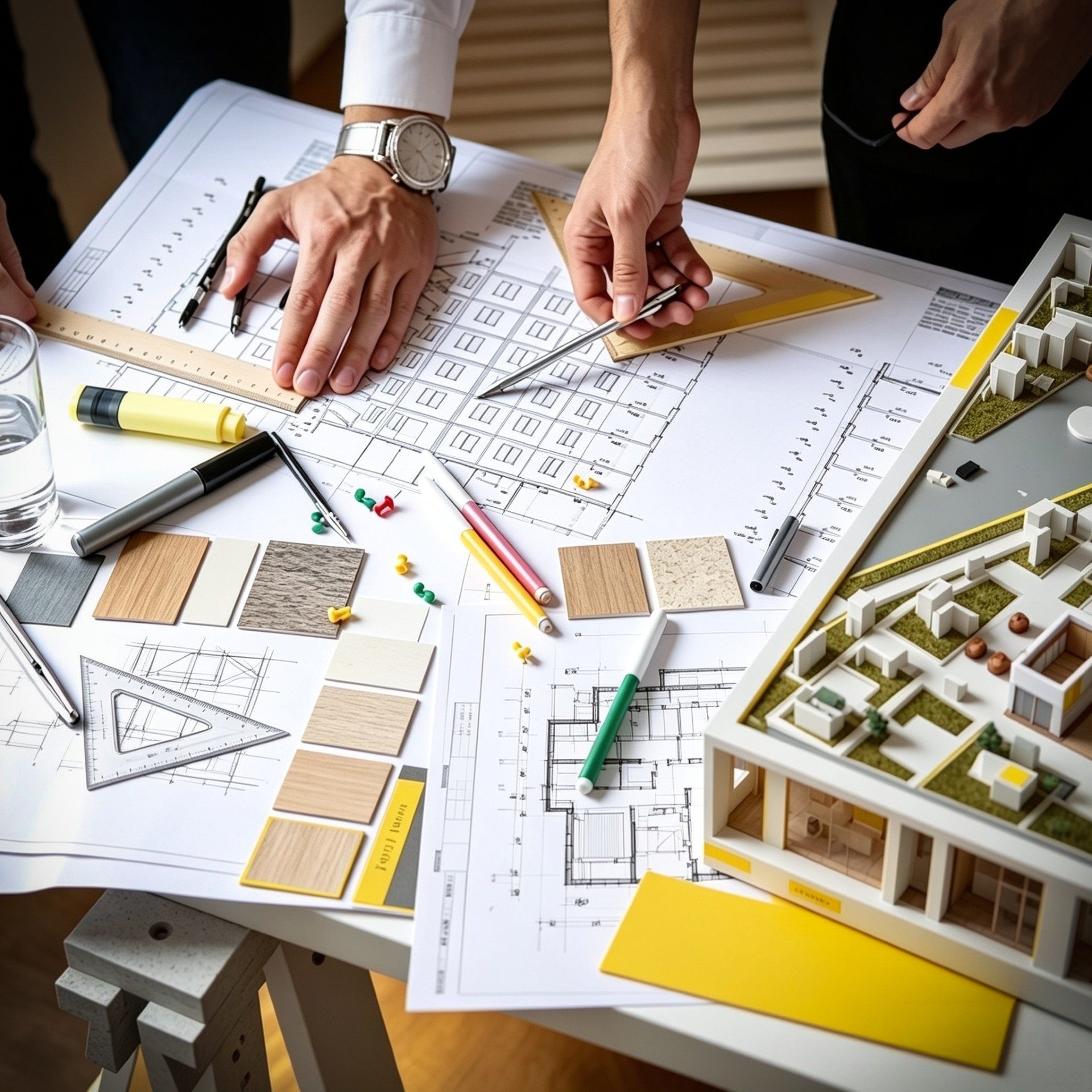
Healthcare buildings are some of the most complex environments to design. They must support clinical safety, infection prevention, staff workflows, patient dignity, operational resilience and long-term adaptability, often within constrained estates and under intense financial pressure.
It is, therefore, no surprise that healthcare design in the UK is shaped by a detailed framework of standards, including Health Building Notes (HBNs), Health Technical Memoranda (HTMs), Building Regulations and specialist clinical guidance. These documents provide an essential baseline, ensuring that spaces are safe, technically robust and capable of supporting the services they house. However, as Daniel Girdlestone, Healthcare Clinical Design Specialist at AD Architects, observes through his work across healthcare projects, compliance alone does not guarantee that healthcare environments will work well for everyone who uses them.
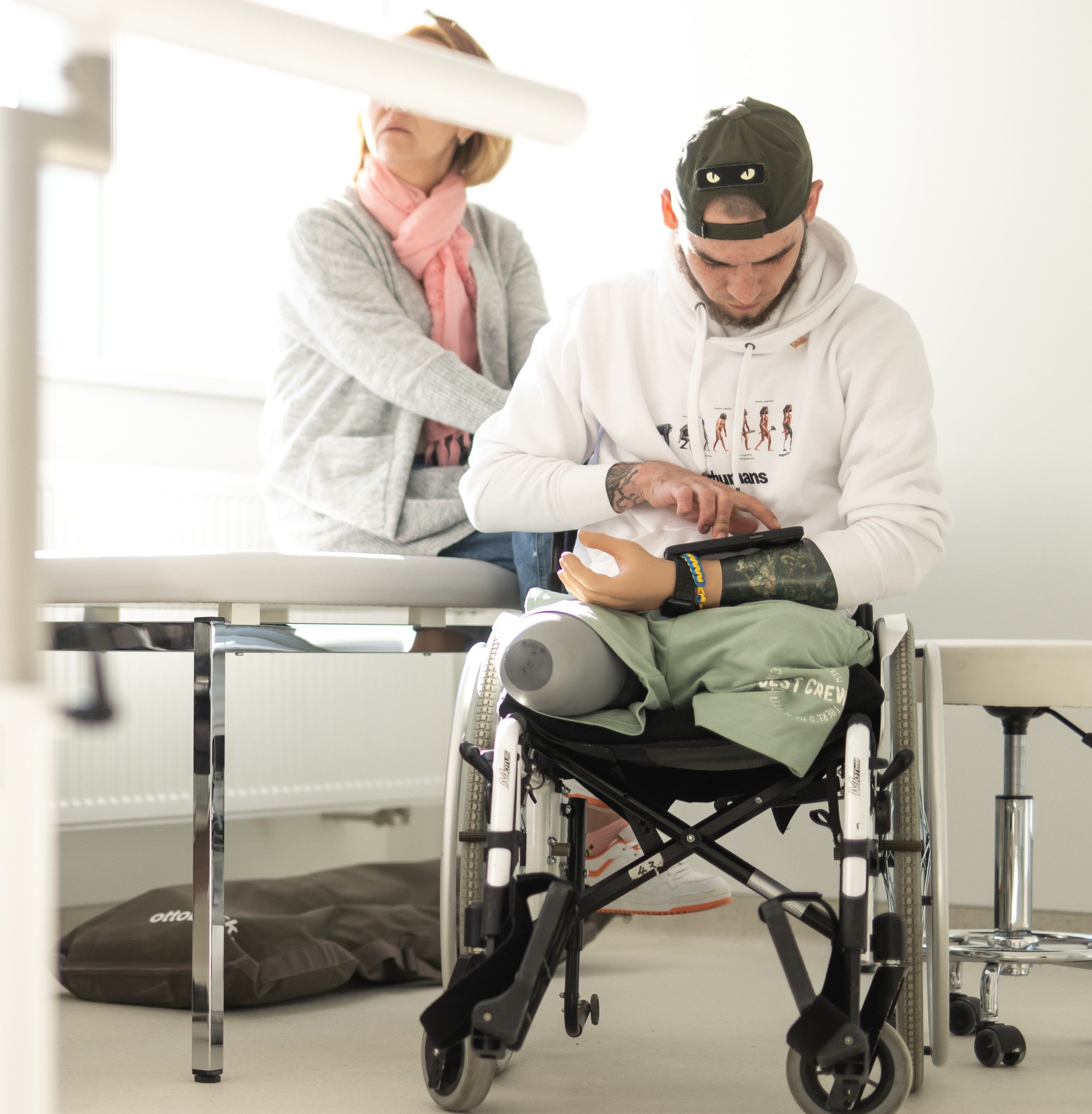
Compliance is not the same as inclusion, and that distinction is becoming increasingly important for healthcare leaders. The NHS is serving a population that is older, more diverse and more clinically complex, with 10.4 million disabled people recorded across England and Wales in the 2021 Census, representing 17.8 percent of the population, alongside more than half a million people in England living with a formal diagnosis of dementia as of 2025, a figure that continues to rise. These are not peripheral users, but a substantial proportion of the communities healthcare estates exist to serve.
At the same time, the system is operating under intense operational pressure, with estates expected to support faster patient flow, safer care, better patient experience and more efficient use of staff time. In this context, inclusive design can no longer be treated as a specialist layer added late in the process. It has to be understood as part of how healthcare capacity is created, protected and used.
This article draws on Daniel’s experience of the recurring gap between technical compliance and real-world usability. The question facing healthcare leaders is no longer whether inclusive design matters, but whether environments that do not fully accommodate the full spectrum of human needs can truly be seen as safe, efficient, or fit for purpose.
Inclusive design as a measure of performance
Inclusive design is often discussed as a moral obligation, and rightly so. Healthcare environments should be accessible, dignified and equitable. But for senior leaders responsible for estates performance, clinical outcomes and operational resilience, the case for inclusion is also profoundly practical.
The design of a building shapes how people move through it, how confidently they act, how much support they require and how safely services can operate under pressure. Well-designed, legible environments reduce friction across the system by making routes easier to understand, supporting safer movement through thoughtful use of visual contrast, and creating calmer spaces where patients, visitors and staff can communicate more effectively. These measures are not decorative; they influence behaviour, decision-making and flow in ways that directly affect day-to-day service performance.
When environments are difficult to understand, the burden does not disappear, it is simply transferred elsewhere. Reception teams become navigators, nurses and healthcare assistants absorb wayfinding and reassurance into already stretched roles, and porters and volunteers compensate for confusing layouts. Patients may arrive late to appointments feeling anxious, disoriented or increasingly dependent on others, while systems already operating close to capacity absorb the cumulative impact of avoidable environmental barriers.
Spaces should support the work, not add extra steps or barriers
This is why inclusion can no longer be treated as an optional enhancement or a specialist layer. When embedded early in the design process, inclusive principles align naturally with efficiency rather than competing with it. They become part of the infrastructure of good care: not an addition to the clinical model, but one of the conditions that allows that model to function safely, efficiently and at scale.
Legibility: the hidden infrastructure of safer care
One of the clearest ways inclusive design influences performances is through legibility. In healthcare environments, people need to understand where they are, where they are going and what is expected of them, often while unwell, anxious, tired or supporting someone else through a difficult moment. A building that is easy to interpret allows patients and visitors to move with greater confidence; one that is visually confusing can quickly create hesitation, dependence and risk.
This is particularly important in complex healthcare estates, where routes are often shaped by years of expansion, adaptation and service change. Entrances move, departments are reconfigured, temporary routes become permanent and signage systems grow in layers. What feels familiar to staff who use the building every day can be disorientating for patients and visitors encountering it under pressure.
Visual accessibility is central to this. The careful use of contrast helps people identify doors, handrails, stair nosings, level changes and key decision points, supporting safer and more confident movement through buildings. Light Reflectance Values offer a practical framework for achieving this clarity, but they are most effective when applied with judgement rather than rigidly. Strong contrast is essential where elements need to be clearly distinguished, while excessive contrast between adjacent floor finishes in level areas can be misinterpreted as a change in level or potential hazard, undermining confidence rather than supporting it. The wider point is that healthcare environments are constantly communicating with their users. When that communication is clear, people move more independently and staff are less likely to be drawn into avoidable reassurance or redirection. When it is unclear, the building creates friction that is felt across the service.
Dementia-friendly design
Dementia-friendly design is one of the clearest examples of why inclusive environments matter. NHS England has described dementia as one of the most significant healthcare challenges in England, and has reported that people living with dementia occupy 25% of acute hospital beds, stay in hospital longer, and that many find hospital admission frightening and confusing.
The built environment plays a significant role in that experience. For a person living with dementia, the built environment can either support orientation or intensify confusion. Clear layouts, consistent materials, good lighting, visible landmarks and unobstructed sightlines can help people move with greater confidence, while poorly considered finishes, glare, reflections or visual ambiguity can create hesitation and distress.
The wider lesson is that dementia-friendly design should not be treated as a specialist requirement relevant only to certain wards or departments. Its principles have value across acute hospitals, outpatient settings, primary care and community facilities, because clearer, calmer and more consistent environments benefit many users. When spaces are easier to interpret, they support independence, reduce avoidable distress and help services operate with fewer points of friction.
Sensory design and neurodiversity
Inclusive design must also account for how healthcare environments are experienced sensorially. For neurodivergent users, including autistic people and those with sensory processing differences, a space that appears functional on plan can still be overwhelming in use. Bright lighting, glare, echo, alarms, crowded waiting areas and excessive visual complexity can all increase stress at the very point when people need to feel calm, understood and able to engage with care.
A patient who is overloaded may find it harder to wait, communicate clearly, process information or participate in assessment. In some cases, the environment may contribute to distress that staff are then required to manage. Designing with sensory experience in mind is therefore not about creating softer or less clinical spaces; it is about reducing avoidable pressure within environments that are already emotionally and operationally intense.
Small decisions can have a significant impact. Better acoustic control, reduced glare, more considered lighting, quieter waiting options and simpler visual environments can help people regulate and feel more in control. These interventions are particularly important for neurodivergent users, but they also benefit children, older people, anxious patients, people in pain and staff working long shifts in demanding settings. A calmer building is not a lesser clinical environment; it is often a more effective one.
Designing for the realities of care
Inclusive healthcare design also requires a realistic understanding of the physical diversity of the people using services. Healthcare environments are not used by a single standard patient, but by people with different bodies, abilities, mobility needs and levels of support. Designing for that variation is an important part of delivering care safely and with dignity.
Bariatric provision is a clear example. As the number of bariatric patients continues to rise, many healthcare Trusts are increasingly seeking guidance on how to design environments that can support safe, dignified and efficient care. This requires early coordination of room sizes, door widths, circulation space, structural capacity, hoist access, sanitary provision, equipment storage and staff safety. When these considerations are planned early, they can be integrated naturally into the overall design. When they are left too late, services may be forced to rely on workarounds that affect dignity, increase manual handling risk and place additional pressure on staff.
Our communities change; our facilities must change with them
Designing for how healthcare works
Taken together, these considerations point to a simple but often overlooked truth: healthcare environments perform according to the assumptions built into them. Buildings designed around narrow definitions of ability place hidden demands on users and staff. Those designed around human variation absorb complexity instead, supporting safer care and more resilient services.
For healthcare leaders, this reframes inclusive design as a strategic issue, not just a technical or ethical one. Decisions about layout, contrast, acoustics and sensory experience are not peripheral design details. They shape flow, influence behaviour, affect staff capacity and determine how much effort a system must expend simply to function. Inclusive environments do not remove pressure from healthcare systems, but they can prevent buildings from adding to it. At a time when estates are expected to do more with less, this distinction matters. A building that is easier to understand, navigate and tolerate is one that protects care capacity rather than eroding it.
The opportunity for healthcare leaders is to see inclusive design not as designing for exceptions, but as designing for how healthcare actually works. As populations become more diverse and care needs become more complex, the healthcare estate must continue to evolve with the communities it serves. Inclusive design offers a practical route to doing that, creating environments that are safer, more efficient and more dignified for patients, staff and visitors alike.
If we only design for today, we fail tomorrow
Share your perspective with FORTIS
FORTIS is a thought-leadership platform created as a way to give back to the industry by making space for thoughtful perspectives and practical insight from across the sector. We are always interested in hearing from people with experience, ideas or lessons that could help others think differently about the challenges facing the sector.
If you would like to contribute to FORTIS or be part of a future article, we would be delighted to hear from you. Get in touch here