
Article Summary
As neighbourhood health and the shift away from acute care gather pace, mental health services are being challenged to rethink where and how care is delivered. Drawing on insights from Oana Gavriliu, Healthcare Architect and Strategist and Owner of HealthScapes Studio, this article explores how Neighbourhood Mental Health Centres can support that ambition, arguing that location, design and accessibility are central to reducing stigma, improving access and creating more adaptable models of care.
Over the past few years, there has been growing momentum around neighbourhood health. Driven by the ambition to deliver more care closer to home and by the accelerating push for a “left shift” away from acute, hospital-based provision, health systems are rethinking where and how services are delivered. Primary care, community diagnostics and integrated neighbourhood teams have all been central to this conversation. But mental health has often sat slightly to one side: acknowledged as critical to neighbourhood wellbeing, yet harder to spatially define. If we are serious about neighbourhood health, the question becomes unavoidable: what does this look like for mental health services?
This article draws on insights shared by Oana Gavriliu, Healthcare Architect and Strategist and Owner of HealthScapes Studio, whose work focuses on the relationship between healthcare environments, service models and the experience of care. Her perspective highlights that neighbourhood mental health centres are not simply smaller versions of traditional clinics, redistributed across a geography. They represent a different way of thinking about care, one where place, accessibility and experience are integral to how services function, not just where they are located. But to understand why the estate matters, it is first important to clarify what these centres are intended to deliver.
What does a Neighbourhood Mental Health Centre deliver?
A Neighbourhood Mental Health Centre is not simply an existing community mental health clinic relocated closer to where people live. The emerging model is intended to provide an accessible local front door to mental health support, bringing together planned and unplanned care, assessment, multidisciplinary support and elements of crisis response within a neighbourhood setting.
Because the model is still evolving, there is not yet a single fixed template. National pilots are currently testing different approaches, with common threads emerging around access, integration and responsiveness to local need. Some centres may offer extended or 24/7 access, alternatives to A&E attendance and, in some cases, short-stay hospitality beds to support stabilisation without inpatient admission. This represents a shift from much traditional community mental health provision, which has often evolved across multiple locations, services and referral routes, making access harder to navigate and care more fragmented. Rather than separate teams operating from dispersed sites, the ambition is for neighbourhood centres to offer a clearer and more coordinated point of access, working alongside primary care, voluntary sector and wider community partners.
Care will continue to be delivered in people’s homes and digitally, but the centre provides a visible and trusted place where support is easier to access, better connected and more responsive to local need. Importantly, the model is still developing, making this an especially important moment to help shape what neighbourhood mental health care can become.
From centralised services to local presence
The principle behind neighbourhood health is simple: people should be able to access support within the context of their everyday lives. For mental health services, this carries particular significance. Historically, mental health provision has too often been associated with buildings that are hidden, remote or disconnected from daily activity. While often well-intentioned, this separation has reinforced stigma and created practical barriers to access, especially for people experiencing anxiety, distress or fluctuating wellbeing. Neighbourhood Mental Health centres challenge this model. Instead of pulling people out of their communities, they bring services into them, positioned so they can be reached as part of a normal daily routine, typically within a 30‑minute walk or public transport journey.
Crucially, accessibility is not just a question of transport. It is also about where a building sits within the neighbourhood. Centres work best when they are part of the visible fabric of local life – places people already pass, recognise and feel comfortable approaching. As Oana Gavriliu puts it, the ambition is for centres to be “visible but not exposed” present, welcoming and legible, without feeling clinical or overly prominent.
The importance of neighbourhood context
In a mental health setting, access is as much about perception as it is about distance. A site may meet every technical requirement on paper, but if the journey to it feels unsafe, unclear or isolating, it will still act as a barrier. Long routes through poorly overlooked spaces, uninviting entrances or ambiguous access points can all undermine engagement before someone has even reached the door. By contrast, locations within active neighbourhood settings benefit from natural surveillance, clear sightlines and a sense of everyday activity. These are subtle but important factors. They help create an environment where people feel more confident accessing support, particularly at moments when doing so may already feel difficult.
Equally important is proximity to other services. Locating mental health centres near or integrated with GP surgeries, community health facilities, local authority services or voluntary sector organisations reinforces integration of services rather than fragmentation. It allows mental health support to feel like a natural part of wider health and social care rather than a standalone destination. There is also a growing recognition of the importance of proximity to local centres, high streets and community hubs. These settings help normalise attendance, reduce stigma and position mental health as part of everyday wellbeing rather than something hidden away. The ideal location might sit at the edge of a neighbourhood centre: active during the day but with access to calmer spaces nearby. This is why proximity to high streets, local centres and community facilities is often so valuable. These are places that people already understand and navigate, reducing the psychological threshold of walking through the door. In this sense, the centre becomes more than a standalone facility. It becomes part of a wider local ecosystem.
Designing for a different experience of care
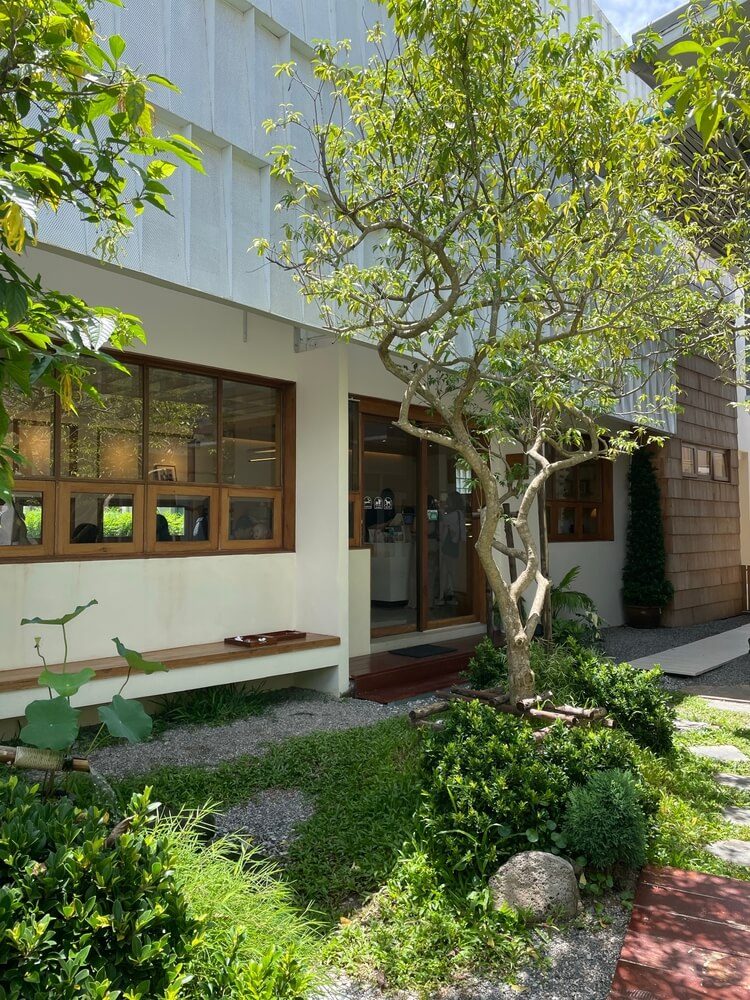
If neighbourhood mental health hubs are to feel meaningfully different from traditional settings, the experience of the building itself has to change. According to Oana, this begins with the external character. Buildings should feel welcoming and non-institutional, avoiding the visual language often associated with clinical environments. Clear, legible entrances and a sense of openness are important, but so is a degree of discretion. A neighbourhood mental health hub must feel welcoming from the moment someone approaches it.
Site characteristics are equally important. Adequate car parking, typically at least a dozen spaces, with accessible bays and drop-off areas supports inclusive access for people with mobility needs or acute distress. Cycle parking and links to active travel routes offer additional choice and support both staff wellbeing and sustainable travel. Internally, the challenge is to support a wide range of activities within a single, coherent environment. One-to-one consultations, group therapy, staff collaboration and informal interactions all need to coexist without creating confusion or tension.
This requires careful zoning and intuitive layouts, but also a strong emphasis on environmental quality. Natural light, views out to nature, and a sense of calm are not simply aesthetic considerations. In mental health settings, they directly influence how spaces are experienced and how comfortable people feel within them, making them intrinsic requirements to creating a therapeutic environment. Access to outdoor space, whether through courtyards, gardens or small landscaped areas, can also play an important role. These spaces offer moments of respite and reflection, supporting both service users and staff.
Designing for flexibility and adaptability
One of the consistent challenges in healthcare estates is that buildings often outlast the models of care they were designed to support. Neighbourhood mental health centres need to respond to this differently. The services delivered within them will continue to evolve, particularly as digital provision, multidisciplinary working and new care pathways develop. This makes both flexibility and adaptability central requirements rather than secondary considerations. Flexibility is about spaces being capable of supporting a variety of activities and service types day to day, enabling different uses within the same environment. Adaptability, meanwhile, is about buildings being capable of evolving over time, allowing spaces to be reconfigured as models of care, technologies and service demands change, without major structural intervention.
This might include the ability to accommodate telehealth consultations across a range of rooms, supporting digital engagement as part of routine care delivery. Rather than creating fixed service zones, neighbourhood mental health centres should provide a range of activity-based spaces – such as areas for group work, private consultations, informal social interaction, respite or hospitality rooms that could support overnight stays where appropriate, and flexible workspaces with hot-desking used by different clinical teams. Crucially, this relies on strong digital infrastructure embedded from the outset, including power, connectivity and systems that enable services to work flexibly across settings, support hybrid models of care and adapt to changing patterns of use. Rather than fixing a single model in place, the aim is to create a framework that can evolve over time.
Delivering the model
Taken together, these considerations point to a simple but important conclusion: neighbourhood mental health centres cannot be delivered as a repackaging of existing estate typologies. They require a different starting point. In the context of the left shift, place is not a neutral container for services. Location, visibility, accessibility and design choices actively shape how care is accessed and experienced. A centre that is poorly connected, hidden away or overly institutional risks replicating the very barriers neighbourhood models are trying to dismantle. Conversely, one that is embedded in everyday neighbourhood life, legible, calm and adaptable can become a genuine front door to mental health support.
This has implications not just for individual buildings, but for how systems think about planning and investment. Delivering neighbourhood mental health at scale will depend on close alignment between clinical strategy, estates decision-making and local context. It means resisting the temptation to prioritise availability of land and/or properties over suitability of location, or short-term efficiency over long-term adaptability. At the same time, an important question remains about scale. While smaller neighbourhood mental health centres may provide accessible, community-facing front doors to care, there may be circumstances where greater critical mass is beneficial. Bringing together multidisciplinary teams, crisis support, outpatient activity, voluntary sector partners and short-stay hospitality beds within a larger neighbourhood mental health hub may allow services to respond more safely and flexibly to a wider range of needs. In some places, this may mean integrating patient-facing centres with consolidated team bases; in others, mental health may sit alongside wider neighbourhood health hubs, co-located with primary care and community services.
What matters most is that these facilities are conceived as part of a wider local ecosystem –connected to primary care, community services and voluntary organisations, and responsive to the distinct character of the places they serve. In these settings, the centre – or hub – becomes more than a site for appointments. It becomes part of the everyday infrastructure of wellbeing. As the neighbourhood health agenda continues to gather pace, mental health has an opportunity to define its spatial expression with clarity and intent. If the ambition is to deliver care closer to home, reduce stigma and support people earlier, then the environments that host these services must reflect that ambition. The question is no longer whether neighbourhood mental health centres are needed, but what size, configuration and location will allow them to best support the communities they are intended to serve.