In conversation with FORTIS, Richard Carter, Chief Technology Officer, and Victoria Hatcher, Chief Customer Officer, at Proximie discussed how operational data can improve theatre utilisation, drawing on Proximie's year-long NHS surgical AI evaluation, supported by AWS and Deloitte.
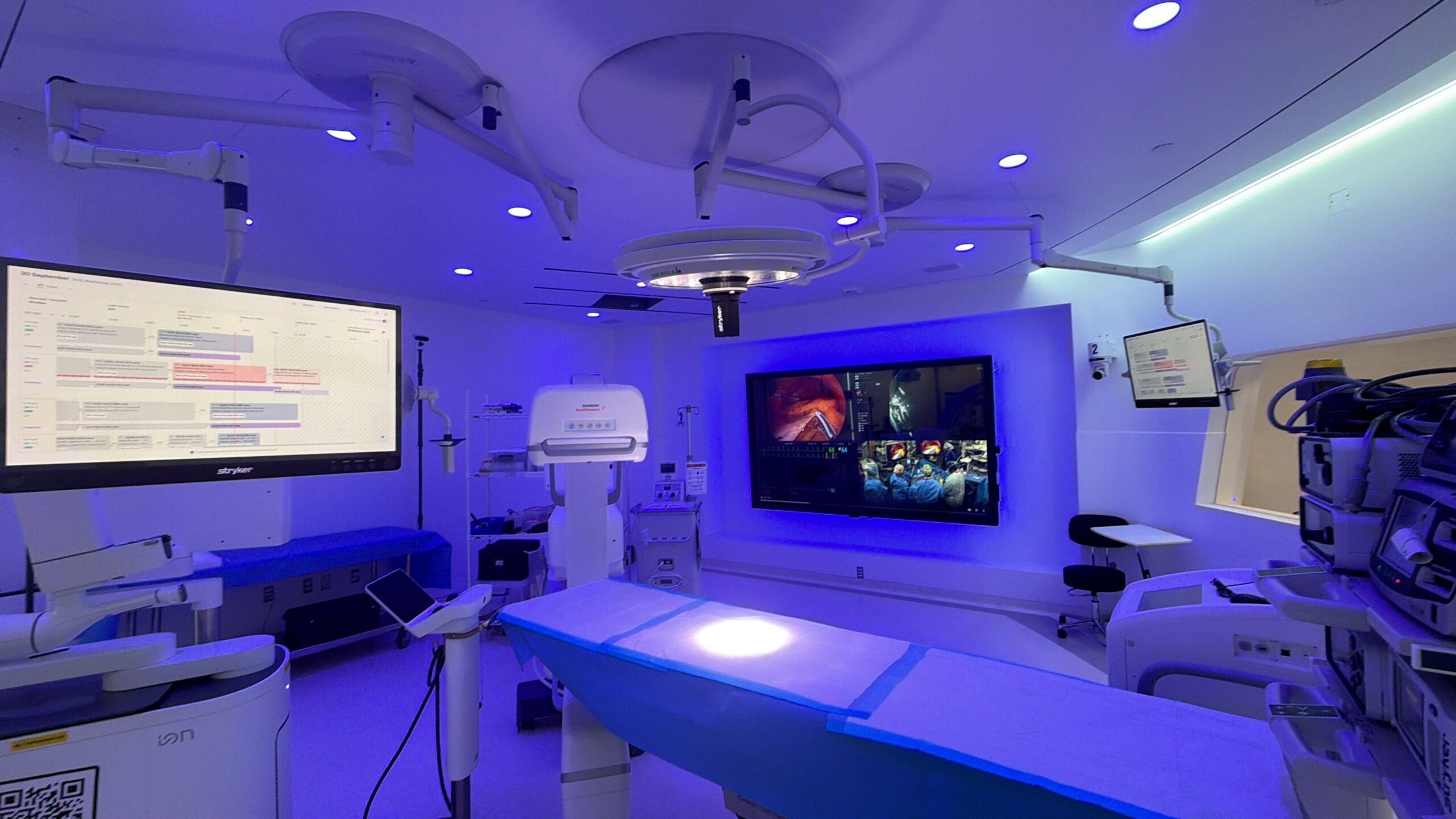
At the end of a morning operating list, a theatre manager may have records showing which scheduled cases were completed and how long each procedure took. These records, on their own, offer limited insight into how the list performed against the plan, where delays occurred or how they affected the timing of subsequent cases.
Understanding how effectively operating theatres are being used is an important step towards making better use of existing NHS capacity. Richard Carter, Chief Technology Officer, and Victoria Hatcher, Chief Customer Officer at Proximie, offer their perspectives on how better visibility of theatre activity can help Trusts identify opportunities for improvement. Their insights draw on Proximie’s year-long NHS evaluation, which spans eight NHS hospital sites and 104 operating theatres, endoscopy suites and catheterisation laboratories, with more than 20,000 procedures expected annually. The programme is supported by AWS, which provides cloud and AI infrastructure, and Deloitte, which supports transformation and programme delivery across participating NHS organisations.
During the discussion, Carter pointed to an analysis of 3,341 operations at one NHS Trust, which found that manually recorded data differed from Proximie ambient data capture by more than two minutes in 59% of the metrics assessed. Those minutes, which add up to hours, as Carter noted, were assumed to have been used for surgery, meaning the discrepancy went unchallenged. Such inaccuracies can make it difficult for teams to investigate delays, compare lists and identify operational changes that could make better use of scheduled time.
Where operating theatre time is lost
Carter explained that manually recorded timestamps can give an inaccurate picture of theatre utilisation because staff often enter information retrospectively, relying on memory while managing competing clinical demands. Hatcher linked this to the wider operational picture, presenting that only 10–15% of variation in theatre time is clinical, with much of the remainder associated with the operational processes surrounding a procedure. Turnaround time provides a practical example. As she explained during the discussion,
What we don’t need to do is spend 55 minutes turning around a room when you can do it in 12
Proximie’s response, Carter said, has been to use ambient computer vision and AI to capture theatre activity and detect surgical events without requiring staff to change their normal working practices or relying too much on manually entered timestamps.
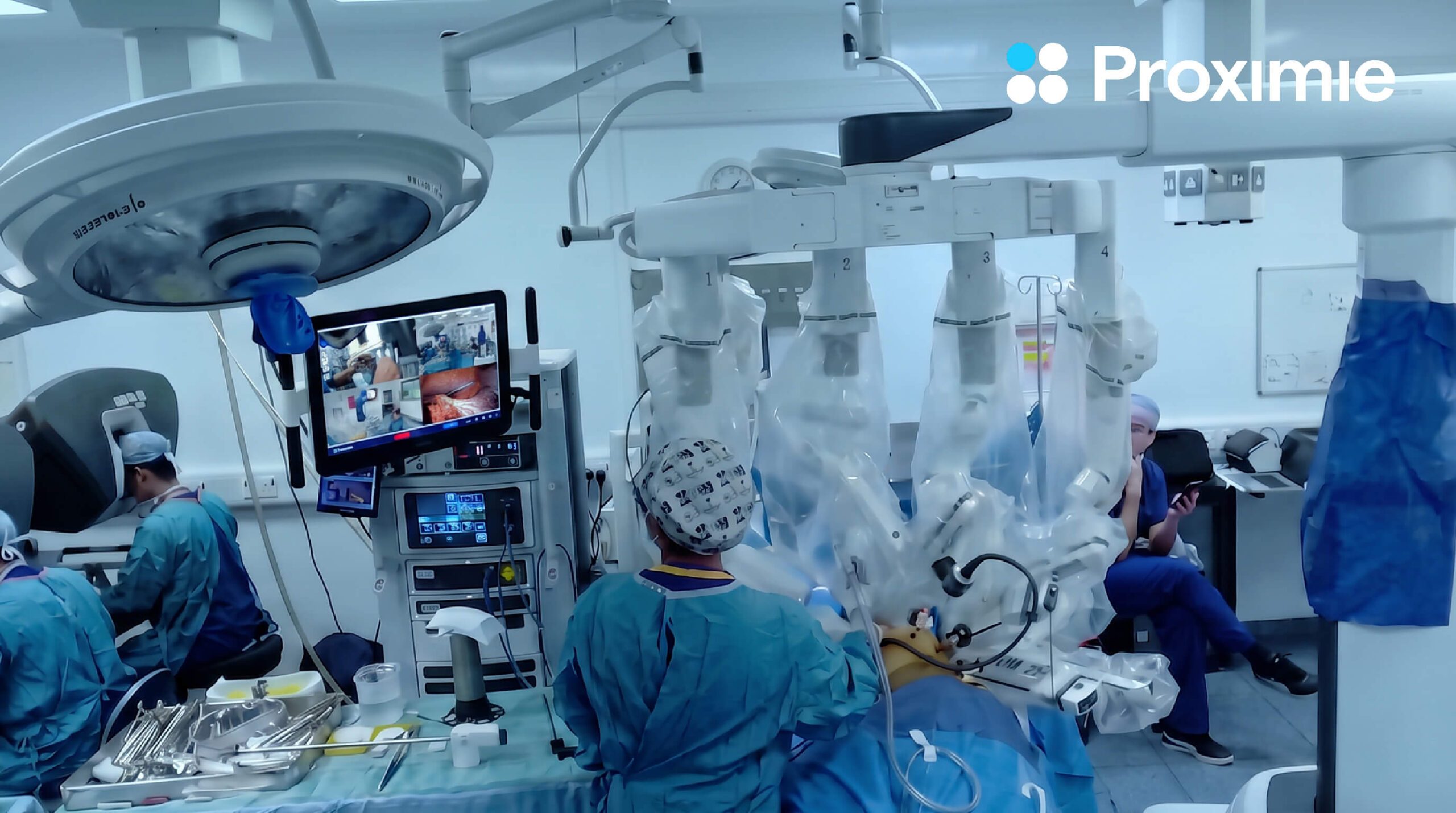
He also distinguished between retrospective analysis and real-time visibility, arguing that reviewing data after a procedure can help explain why a theatre list ran behind schedule, but it offers limited scope to address problems as they develop. Real-time information, by contrast, allows teams to identify when a list is falling behind and consider the implications before the end of the day.
The same visibility can help teams anticipate pressures on other hospital services. According to Carter, changes to individual case durations can cause several theatres to finish at similar times, creating a surge in demand for recovery space. Identifying this risk in advance gives teams an opportunity to plan patient movements and manage available capacity. Staff can also use the same data to weigh which cancellation would have the least impact, taking account of patients who have already been cancelled or whose clinical circumstances make further delays particularly undesirable.
What NHS Trusts can learn from existing implementations
Results from existing NHS implementations offer an indication of how more accurate operational data can translate into additional capacity. Figures shared by Hatcher, for example, show an 8.2% increase in cases and a 30% reduction in turnover time across sites where Proximie is deployed. NHS deployments include University Hospitals Coventry and Warwickshire and Barking, Havering and Redbridge University Hospitals NHS Trust.
At Guy’s and St Thomas’ NHS Foundation Trust, an independent evaluation of two robotic thoracic surgery lists found that targeted workflow improvements reduced procedure lengths by almost 20 minutes per case on average, recovering nearly an hour across each list. Consultant thoracic surgeon Andrea Billè said the time saved could allow one additional case per day without extending theatre hours. Across two lists running five days a week, that equates to an estimated 40 additional patients a month. Billè also reported that cancellations caused by overrunning or inefficiency had fallen to “pretty much zero”.
These results do not mean every Trust will see the same gains. Local workflows and the ability to identify and address specific problems will influence the outcome; reliable data is essential to making those decisions well. As Carter warned, applying AI to unreliable information risks producing misleading conclusions more quickly:
If you try and run AI over bad data, you’re just going to get wrong answers much, much faster.
Turning theatre data into operational improvements
Hatcher’s experience with the participating Trusts adds context to this challenge. She noted that Coventry and Barking had both taken part in quality-improvement work years before joining the evaluation, which, in her view, had encouraged greater openness to change.
That openness does not develop in isolation. Staff fatigue and scepticism can make new ways of working difficult to establish, particularly when NHS teams are already under pressure. Hatcher described the biggest hurdle as “apathy”, making it important to show staff how a system can support their work rather than add another task.
Implementation needs to account for how staff work in practice. Introducing new technology requires time to understand existing workflows, involve the people who will use it and address concerns before changes go live. Hatcher outlined an approach that allows up to two months for engagement with staff ahead of implementation, supported by people with experience of NHS operations, including theatre management.
That preparation is particularly relevant in operating theatres, as they continue to rely heavily on manual processes and older systems. For her, changing established practices in this environment requires support from leaders who understand the role of surgeons in clinical decision-making and the importance of patient safety, and who can help staff adapt to new ways of working.
What better theatre data means for future NHS estates investment
Across healthcare systems in the UK and globally, Proximie tends to see the potential to recover 19–25% of operating room time through improvements to existing workflows. For NHS Trusts facing growing demand for planned care, the findings raise a practical question: how much additional capacity is needed once the use of existing theatres has been properly understood?
As Carter highlighted, the case for more capacity is often valid, but understanding how existing theatres perform is what really determines where that capacity is needed and what form it should take. This may involve additional operating rooms, changes to existing facilities or investment in the infrastructure needed to keep patients moving through the hospital. Recovery space and other services must also be considered, since they influence whether scheduled procedures can go ahead.
The value of better data, however, still depends on how it informs decisions. Carter cautioned against treating analysis as an end in itself:
Just looking at the data, studying it, producing endless pretty graphs, and then not acting on it gets you nowhere.
Turning analysis into action also requires clinical, operational, digital and estates teams to agree on the business case, intended outcomes and key performance indicators (KPIs). Hatcher emphasised the importance of this shared understanding, giving teams a common objective basis for deciding what needs to change and assessing whether those changes are working. Sharing lessons across NHS organisations can then help Trusts apply relevant learning to their own services.
Without an accurate assessment of existing capacity, a Trust could commit millions of pounds to additional theatre space while avoidable delays continue to limit the use of its existing rooms. Unreliable data or changes that fail to account for clinical practice could also lead to an overly optimistic assessment of recoverable capacity. The result may be a capital plan based on assumptions that do not reflect how the service actually operates, leaving the Trust with new facilities and the same underlying pressures on planned care.