
Article Summary
Primary care estates are under growing pressure, while opportunities to expand are increasingly limited by capital constraints. Against this backdrop, insights from Stuart Jones, Founder of AgileAcoustics, show how adaptable consultation environments can help unlock capacity within existing footprints, supporting confidentiality, continuity and flexibility while positioning the estate as an active part of service delivery.

Across the UK, healthcare leaders are being asked to deliver more activity, better outcomes and greater efficiency without the certainty of new capital investment. In this environment, clinical capacity optimisation has become a central strategic priority. The pressure is visible everywhere: expanding multidisciplinary teams, rising patient demand, infection prevention standards that remain heightened post-pandemic and buildings that were often designed for service models that no longer exist. For Stuart Jones, Founder and CEO of AgileAcoustics, this is where the conversation needs to shift. Having worked closely with estates and facilities teams across primary and community care, he has observed a common pattern,
The instinct is usually to ask whether we can build more space but increasingly, estates leaders are asking a different question, how can we unlock more performance from the footprint we already have?
For many GP practices and community healthcare settings, traditional capital extensions are simply not realistic. Structural works are costly, disruptive, time-consuming and, in some cases, constrained by planning limitations or leasehold restrictions. Estates and facilities teams are therefore increasingly exploring alternative ways to unlock capacity within existing footprints, some of which are brought up by numerous SMEs in this article.
The Clinical Capacity Challenge
The pressure on primary care is often in terms of insufficient space. Yet the issue is not purely quantitative. As Stuart notes, “The challenge is not simply about square footage. It is about creating clinically appropriate environments that support confidentiality, infection prevention, accessibility and operational continuity.” For consultation space to meet clear standards, it must:
- Allow patients to speak openly
- Be cleanable in line with healthcare protocols
- Remain accessible and safe
- Not compromise day-to-day service delivery during installation or reconfiguration.
Reception areas and administrative spaces frequently present both a challenge and an opportunity. They are often the most spatially flexible parts of a building, yet also the most acoustically exposed and publicly accessible. Introducing clinical activity into such environments demands a careful balance between privacy, practicality and performance. This is where estate strategy moves from reactive accommodation to deliberate design.
How Space Influences Service Delivery
For many years, estates have been positioned as the backdrop to healthcare strategy rather than an active part of it. Clinical priorities are defined, service models are agreed and then the building is expected to accommodate what has been decided. What is becoming increasingly clear, however, is that space does not simply respond to strategy, it shapes it. The configuration of rooms determines how many clinicians can work simultaneously and what type of activity can safely take place. Layout affects patient flow, collaboration between teams and the ability to introduce new pathways. Acoustic integrity influences whether patients feel able to speak openly, particularly in environments that were never designed for high levels of confidentiality. When consultation space is constrained, appointment availability tightens. When layouts are rigid, innovation becomes costly and disruptive rather than progressive.
In primary care, this reality is particularly visible. Many buildings were designed for a very different era of service delivery, long before multidisciplinary teams, digital triage and heightened privacy expectations became the norm. Expanding outward is often constrained by leasehold agreements, planning barriers and limited capital. As a result, estates leaders are increasingly turning their attention inward, reassessing how existing space is being used and where it may be underperforming. The discussion is shifting away from automatic expansion and towards a more strategic examination of adaptability, asking not simply how to create more space, but how to make the current footprint work more effectively for the services it now needs to support.
Flexibility as Infrastructure
An alternative mindset treats certain elements of clinical infrastructure as adaptable rather than fixed. Stuart describes one such approach as the introduction of “modular, non-fixed consultation spaces that can be installed within underutilised areas, without structural alteration.”
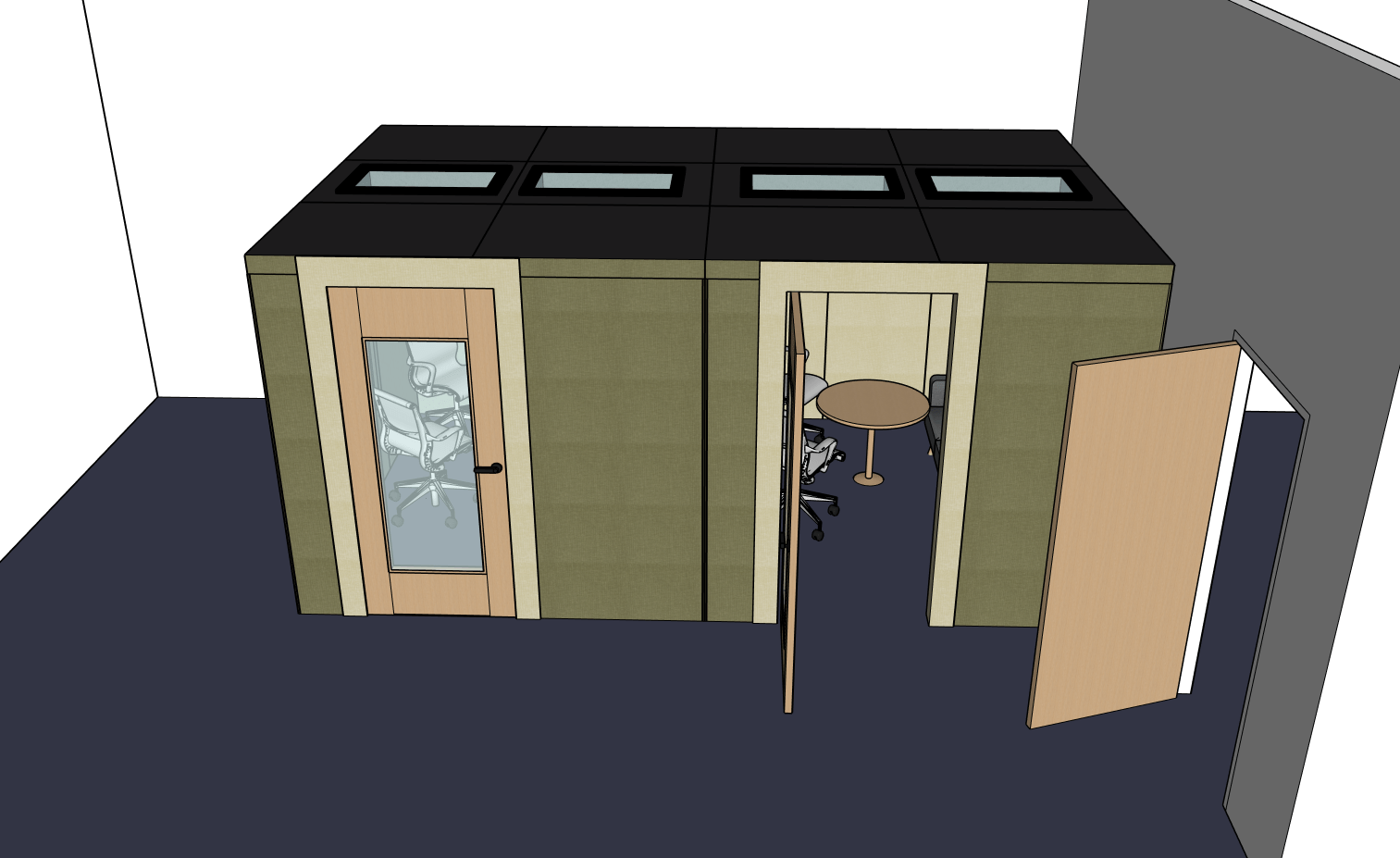
The strategic value of this approach lies not simply in speed, but in optionality. By avoiding structural fixing, organisations retain the ability to relocate, reconfigure or repurpose space as service models evolve. As Stuart observes, this introduces “a different way of thinking about estates planning; one that treats certain elements of clinical infrastructure as adaptable rather than permanent.” In a system where workforce composition, service pathways and digital integration continue to change, flexibility becomes a strategic asset. Flexibility is no longer a design preference, but a form of resilience built into the estate itself, as Richard Dickson and Toby Banfield argue note here.
Minimising Operational Disruption
One of the most significant constraints in primary care estate projects is operational continuity. Extended downtime is rarely feasible in practices already managing appointment backlogs and workforce pressures. Solutions that avoid structural building work and major disruption offer a meaningful operational advantage. Stuart offered an example from a Leicester practice, where three consultation rooms were introduced within the existing footprint – including two located within the main reception area -without service closure. Installation occurred within a live environment, preserving continuity of care. This example demonstrates that capacity can be created within constrained estates when interventions are designed around operational realities. For estates leaders, this shifts the evaluation criteria. The value of an intervention is not measured solely in capital cost, but also in the continuity it preserves and the flexibility it enables.
What emerges from this perspective is a broader shift in how estate can function within primary care. Traditionally, increasing consultation capacity has been synonymous with capital build and long approval cycles. Adaptable infrastructure introduces an intermediate layer of agility – one that can:
- Accelerate the creation of clinical space
- Reduce capital risk
- Preserve flexibility for future service redesign
- Minimise operational disruption
This does not replace the need for long-term estate investment. However, it provides a pragmatic tool for responding to immediate pressures while maintaining strategic headroom. As Stuart’s reflections suggest, estate decisions are not merely technical. They directly influence workforce deployment, confidentiality standards, patient experience and the ability of organisations to adapt to evolving care models.
Planning for Adaptability
Healthcare delivery is unlikely to stabilise in the near future. Digital consultations, multidisciplinary working and integrated care pathways will continue to reshape spatial needs. Estates planning must therefore balance permanence with adaptability. Some elements of infrastructure will require long-term commitment. Others may benefit from a more flexible approach that allows reconfiguration as services evolve. In this context, the strategic question shifts. It is no longer simply, “Can we build more space?” It becomes, “How flexibly can we use the space we already have?”
Rethinking consultation capacity is not about short-term fixes. It is about recognising that estate strategy can act as a lever for operational resilience. By introducing adaptable clinical environments within existing footprints, organisations can unlock capacity, strengthen confidentiality and maintain service continuity without defaulting to capital expansion. As pressures on primary care intensify, this reframing may become increasingly important. Estate is not simply a backdrop to service delivery; it is an active instrument in shaping how care is accessed, delivered and sustained.